


Collin County and its county seat
Collin County was created in 1846 from former Fannin County land and named for Collin McKinney, a pioneer surveyor and a signer of the Texas Declaration of Independence. The first county seat, Buckner, was not within three miles of the county's geographic center, so a new site was needed. The Texas Legislature established McKinney as the county seat on March 16, 1848, and the city's history records that voters chose the McKinney site over Sloan's Grove.
On March 24, 1849, 120 acres from the William and Margaret Davis holdings were conveyed for the new town. McKinney was incorporated that year and re-incorporated in 1859. Cotton drove early growth: the city's history notes yields rising from 16 bales in 1860 to 4,371 in 1870, and the Houston and Texas Central Railroad arrived in 1872. By 1885 McKinney had about 2,000 residents, newspapers, banks, flour mills, and an opera house.
County government left the square in 1979. Collin County's courts now sit in the Russell A. Steindam Courts Building at 2100 Bloomdale Road in north McKinney.
The courthouse, 1874 to today
| Year | Event |
|---|---|
| 1874 | County commissioners vote to build a new courthouse on the square |
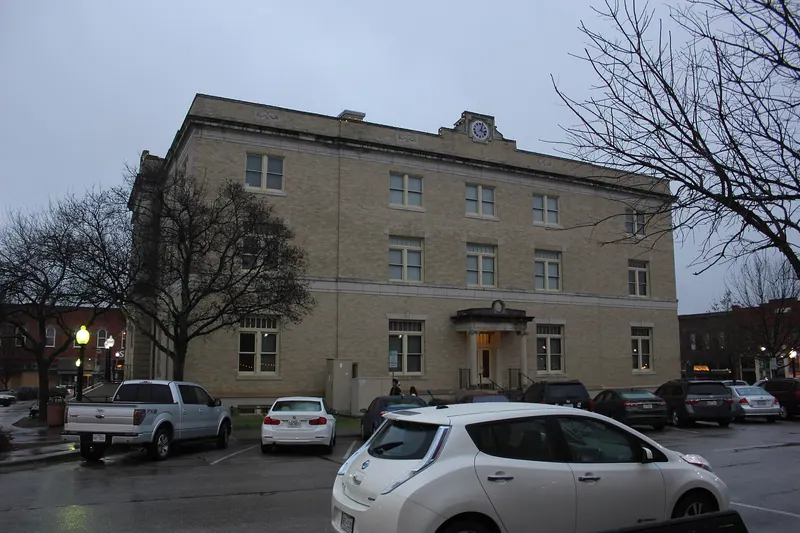
| 1875 to 1876 | The two-story Second Empire courthouse, designed by Charles Wheelock with a mansard roof and twin towers, is completed. The city's history calls it the tallest building in Texas north of San Antonio when finished, and it is dedicated in 1876 before a crowd of about 1,000. |
| 1926 to 1928 | Plans are drawn in 1926, and remodeling starts in 1927 under architect W.A. Peters of Sparger and Peters, with A.J. Rife Construction. The work adds a third floor and a basement, more than doubles the floor space, replaces the mansard roof and wood framing with concrete and steel, and gives the building its Neoclassical Revival face. It is completed in 1928. |
| 1974 | The south stairs are replaced with an elevator |
| 1979 | The county vacates the building for a new courthouse on McDonald Street; the last cases are heard in 1980 |
| 1983 | The McKinney Commercial Historic District, which includes the courthouse, is listed on the National Register of Historic Places |
| 2003 to 2006 | A plan to convert the building into a cultural center is approved in October 2003, funded by the City of McKinney, the McKinney Community Development Corp., and Collin County. It reopens as the McKinney Performing Arts Center on March 30, 2006 |
| 2026 | The center closes Feb. 1 for a renovation approved by the Texas Historical Commission in fall 2025, with $9.2 million approved by the City Council (Community Impact) |
The 2026 project covers heating and cooling, electrical, roofing, drainage, elevators, and accessibility; new theater seating and acoustics; restoration of 1930s paint colors inside and out; a bar built from the former judge's bench; original courtroom railings moved to the front of the stage; and a basement art gallery and studio space for local arts groups. In July 2026, demolition was nearly complete. The city's reopening target is fall 2026, and no reopening date had been confirmed. Check VisitMPAC.com for the reopening and schedule.
Buildings to know around the square
From the city's Historic Downtown tour:
| Building | Address | Date and notes |
|---|---|---|
| Historic Collin County Courthouse | 111 N. Tennessee St. | 1874 to 1876, remodeled 1927 to 1928; now the McKinney Performing Arts Center |
| Historic Collin County Jail | 115 S. Kentucky St. | Completed 1880 in Victorian Italianate style, designed by F.E. Ruffini; closed 1979; now offices |
| Historic US Post Office | 300 E. Virginia St. | 1911, Italianate, designed by J.H. Suttle; deeded to Collin County in 1959; now the Collin County History Museum |
| Ritz Theatre | 103 E. Virginia St. | Opened 1928; operated into the 1960s; now retail and offices |
| Heard Opera House | 114 W. Louisiana St. | Upper floor opera house above the J.S. and S.D. Heard Mercantile; opera house lost to fire in 1910; now home to Rick's Chophouse and The Grand Hotel |
| Dowell Hardware | 208 E. Louisiana St. | Built 1888, remodeled 1922; Chicago-style windows; rehabilitated 1998 to 1999 |
| First National Bank | 110 N. Tennessee St. | McKinney's only example of Beaux Arts Classicism; bank founded 1869 |
| Lovejoy Building | 102 E. Louisiana St. | 1926; later a J.C. Penney store |
| Newsome-Abernathy Building | 100 E. Louisiana St. | Built for the Abernathy law offices; now Spoons Cafe |
| Central Continental Bank | 115 E. Virginia St. | Neoclassical Revival; site of the 1913 Odd Fellows building collapse |
| McKinney Examiner Building | 112 S. Kentucky St. | Home of the McKinney Examiner, established 1886; now a pizza restaurant |
| Downtown kiosk | Southwest corner of Kentucky and Virginia streets | Preserves original rail from the Interurban line, which ran from 1908 until 1948 between Sherman and Waco |
The square itself was paved in 1908 with bricks from Thurber.
A short walk south of the square, Chestnut Square Historic Village at 315 S. Chestnut St. preserves historic houses and buildings dating from the 1850s, with guided tours Thursday through Saturday at 11 a.m.
Shops and dining districts
McKinney Main Street's 2026 directory lists 214 downtown businesses: 121 shops, 38 places to dine, 22 after-dark spots, 17 sweets and coffee shops, 14 galleries, and 18 services and places to stay. They cluster in four areas:
- The square. Kentucky, Tennessee, Virginia, and Louisiana streets frame the courthouse. Clothing boutiques, home decor shops, Neighbor Books, Red Zeppelin Records, and restaurants including Square Burger, Rick's Chophouse, The Celt Irish Pub, and Harvest at the Masonic (215 N. Kentucky St.) are within a block.
- East Louisiana Street to the Mill District. Louisiana Street runs east past Urban Grill, Mellow Mushroom, Filtered coffee, Dempsey's Marketplace, and Local Yocal BBQ to the TUPPS Brewery campus at 402 E. Louisiana St., which reuses buildings about a century old in the Historic Mill District.
- West Virginia and Louisiana streets. Union Bear, Sugarbacon Proper Kitchen, Hamm's Meat and Market, Lockwood Distilling, Barons Creek Vineyards, and Collective Coffee sit west of the square.
- Chestnut Street. The Guava Tree Cuban Cafe, The Cipher Lounge, and Collin County Feed and Seed line Chestnut Street south toward Chestnut Square.
The restaurants page lists every downtown restaurant with its address.
The McKinney Cotton Mill
The Texas Cotton Mill Company opened McKinney's first textile mill in 1910. The McKinney Cotton Mill at McDonald and Elm streets in east McKinney, has been owned by the Casey family since 1996. Part of the mill's 200,000-square-foot facility now houses MillHouse McKinney, a shared workspace run by a nonprofit foundation that hosts art festivals, makers markets, and quarterly exhibits. In July 2023 the City Council approved site plan variances for a 32.1-acre mixed-use redevelopment around the mill by Presidium, planned with apartments, townhomes, offices, retail, and 7 acres of parkland.
Recurring events, 2026
| Event | 2026 date | Details |
|---|---|---|
| Krewe of Barkus | Sunday, Feb. 15 | Mardi Gras style costumed dog parade from Dr. Glenn Mitchell Memorial Park, 300 W. Louisiana St.; about 2,000 to 3,000 attendees |
| Arts in Bloom | April 10 to 12 | More than 120 juried artists, 12 Texas wineries, live music; free admission; about 40,000 attendees; usually the second weekend of April |
| Texas Music Revolution | June 5 and 6 | 30th annual Texas country music festival hosted by KHYI 95.3 The Range, on indoor and outdoor stages; ticketed |
| McKinney Oktoberfest | Sept. 25 to 27 | 19th annual; free general admission and a paid VIP Biergarten; about 80,000 attendees; usually the last full weekend of September |
| Home for the Holidays | Nov. 27 to 29 | Thanksgiving weekend; community tree lighting Friday at 6:15 p.m., Ferris wheel, Santa, and Small Business Saturday; about 60,000 attendees |
| McKinney Farmers Market | Saturdays | 8 a.m. to noon at Chestnut Square |
| McKinney Historic Half | April 3, 2027 | Half marathon finishing at TUPPS Brewery |
Attendance figures are McKinney Main Street's estimates. The city's Red, White and BOOM Independence Day celebration is also on the downtown calendar each July; the city posts each year's schedule. Arts in Bloom, Oktoberfest, and Home for the Holidays close streets inside the festival area.
Parking and the trolley
Every public parking space downtown is free.
| Option | Location | Notes |
|---|---|---|
| Davis Street Garage | 260 Davis St. | Covered; Blink EV charging |
| Chestnut Street Garage | 202 S. Chestnut St. | Covered |
| Public lots | 13 lots around downtown | Free all day |
| On-street spaces | Around the square | Free, 3-hour limit 8 a.m. to 5 p.m. on weekdays; no limit evenings and weekends |
| EV charging | Davis Street Garage and City Hall, 401 E. Virginia St. | Blink chargers |
The free Downtown Trolley runs Thursday through Saturday from 11 a.m. to 7 p.m. and Sunday from noon to 5 p.m., stopping at marked stops or when waved down. It is accessible, allows pets, and does not carry bikes; hours can change for events and weather, and a live tracker shows its location.
During Oktoberfest and Home for the Holidays, a free shuttle runs about every 15 minutes from First McKinney Baptist Church, 1615 W. Louisiana St., near US 75. Main Street asks downtown employees to use the garages and remote lots so on-street spaces stay open for visitors.
The McKinney Main Street program
McKinney Main Street is a program of the City of McKinney, with a board appointed by the City Council and funding mainly from grants, events, and memberships. It works with the Texas Historical Commission, downtown property owners, merchants, and east side neighborhood groups. Staff work covers the four Main Street areas of design, organization, promotion, and economic vitality, and the program describes its aim as preserving historic commercial architecture while supporting downtown business. Downtown is also the city's designated Cultural District.
- Office: 111 N. Tennessee St.
- Phone: 972-547-2660
- Business meetings: Second Tuesday of each month at 8:30 a.m.
- Downtown Dollars: Gift cards accepted at participating downtown businesses.
Preservation rules
The city's Historic Preservation Office reviews exterior changes to designated and contributing properties, including windows, siding, doors, porches, fencing, and signage, through a Certificate of Appropriateness. Ordinary maintenance that does not change materials or features is not restricted, and interior changes are not reviewed. A 2023 to 2024 survey of more than 6,200 properties in east McKinney found 3,338 historic resources. The Historic Overlay District receives the closest oversight, and the larger Historic Neighborhood Improvement Zone offers incentives for owners who maintain or rehabilitate older homes. McKinney was designated a Preserve America Community in January 2006.
Sources (28)
- City of McKinney: History
- City of McKinney: Historic Downtown tour details
- McKinney Performing Arts Center: Our History
- Old Collin County Courthouse (Wikipedia)
- McKinney, Texas (Wikipedia)
- City of McKinney: MPAC to close Feb. 1 for historic renovation
- Community Impact: MPAC closes for renovations (March 2026)
- Community Impact: Demolition nearly complete for MPAC renovations (July 2026)
- Collin County: Probate Court (Russell A. Steindam Courts Building)
- Downtown McKinney
- Downtown McKinney: About McKinney Main Street
- Downtown McKinney: Dining directory
- Downtown McKinney: Shopping directory
- Downtown McKinney: Parking and Trolley
- Downtown McKinney: Krewe of Barkus
- Downtown McKinney: Home for the Holidays
- City of McKinney: Downtown business resources and signature events
- City of McKinney: Arts in Bloom 2026 news release
- Visit McKinney: Oktoberfest festival info
- CollinCounty.com newsletter, May 9, 2026 (Texas Music Revolution)
- City of McKinney: Red, White and BOOM
- Chestnut Square Historic Village
- Dallas Observer: TUPPS Brewery opens in historic Mill District
- Alcalde: Sisters transform historic McKinney Cotton Mill into the MillHouse (Aug. 2026)
- Community Impact: McKinney Cotton Mill mixed-use project (July 2023)
- City of McKinney: Historic Preservation FAQ
- Community Impact: Survey identifies preservation priorities in McKinney (July 2024)
- Advisory Council on Historic Preservation: McKinney, Preserve America community
Last reviewed October 2026. See something out of date? Email info@grisak.com.
 Schools
 Neighborhoods
 Moving to McKinney
 Things to do
